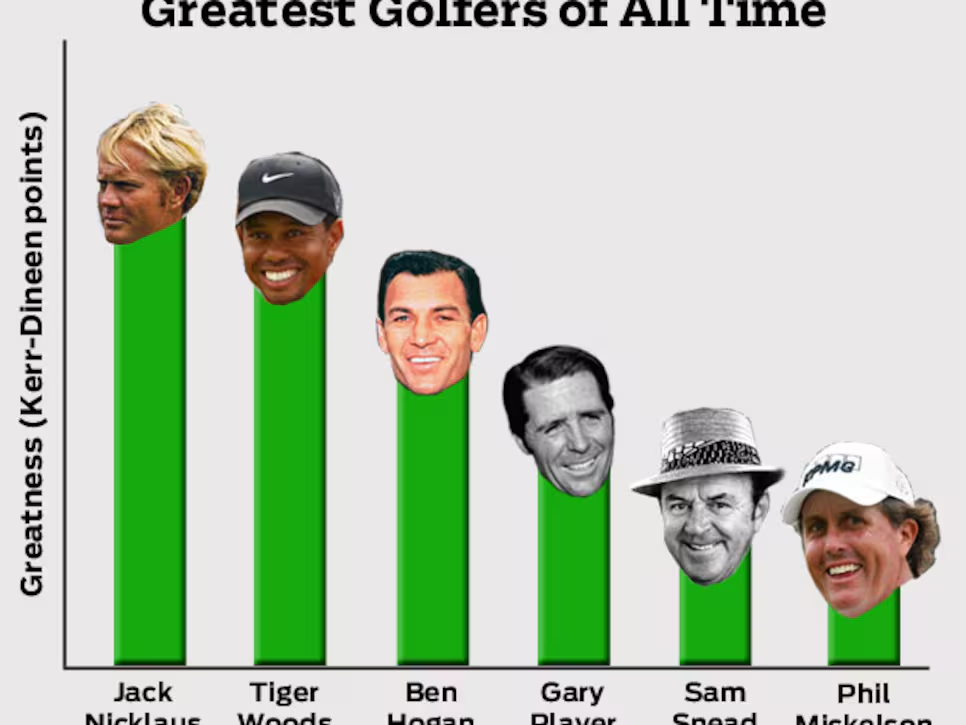
The Influence of Golf Legends on Modern Players – Golf has always been a sport built on tradition. Every swing, every tournament, and every iconic course carries stories from the past. When we talk about modern golf, it’s impossible not to see the fingerprints of legendary players who shaped the game long before today’s stars stepped onto the green. The influence of golf legends on modern players goes far beyond trophies and prize money. It’s about mindset, technique, branding, and even how the sport is consumed globally.
From the dominance of early champions to the global superstardom of recent icons, the journey of golf has been guided by remarkable individuals. Modern players may have access to advanced equipment and sports science, but their foundation is built on lessons left behind by the greats.
How Early Golf Legends Shaped the Modern Game
Before television deals and social media followers, golf legends earned their reputation purely through performance. Players like Bobby Jones defined what excellence looked like in the early 20th century. Jones was not just a champion; he was a symbol of sportsmanship and integrity. His Grand Slam in 1930 remains one of the most remarkable achievements in golf history. Modern players still study his composure under pressure and his strategic approach to course management.
Jones also co-founded The Masters Tournament, a tournament that continues to set the gold standard for major championships. The prestige and traditions associated with The Masters influence how today’s golfers prepare for elite events. The green jacket, the iconic Augusta course, and the emphasis on discipline all reflect the values instilled by early legends.
As professional golf evolved, athletes began to focus more on physical conditioning and consistency. That shift became even more noticeable in the era of global icons who redefined what it meant to be a golf superstar.
The Tiger Effect on Modern Golfers
No discussion about the influence of golf legends on modern players is complete without mentioning Tiger Woods. Often credited with transforming golf into a global phenomenon, Woods changed the sport both competitively and commercially.
His dominance in the late 1990s and 2000s inspired an entire generation of golfers. Many of today’s top players have openly said they started playing golf because they watched Woods win majors on television. His intense training routines, mental toughness, and aggressive playing style set a new benchmark.
Woods proved that golf could be athletic, explosive, and emotionally charged. Modern players now prioritize fitness programs, sports psychologists, and data analysis tools. This professional approach mirrors the path Woods popularized. Even the way tournaments are marketed today—highlighting personalities and rivalries—reflects the commercial model that flourished during his prime.
The “Tiger Effect” also expanded golf’s global reach. Young players from countries with limited golf traditions suddenly believed they could compete on the world stage. The sport became more diverse, more competitive, and more dynamic.
Technical Innovation Inspired by Legends
Golf legends have always influenced equipment trends and technical standards. When a legendary player adopts a specific swing technique or club setup, it often becomes the new norm.
Tiger Woods’ emphasis on power and precision encouraged manufacturers to develop more forgiving drivers and performance-focused golf balls. Similarly, earlier champions influenced club design and ball technology in their time. Modern players benefit from decades of innovation sparked by the demands of elite competitors.
Beyond equipment, legends also shaped swing philosophy. Today’s players analyze slow-motion footage, launch angles, and spin rates, but many core fundamentals still trace back to traditional methods perfected by past greats. Balance, tempo, and mental clarity remain timeless principles passed down through generations.
The Power of Mental Strength and Legacy
Golf is as much a mental game as it is physical. Legends like Jack Nicklaus demonstrated the importance of strategic thinking and emotional control. Known as the “Golden Bear,” Nicklaus holds a record 18 major championships. His ability to stay calm under pressure remains a blueprint for modern champions.
Today’s golfers study how Nicklaus approached major tournaments. He often visualized shots before executing them, a practice that has become common among elite players. Sports psychology, once overlooked, is now a core part of professional golf training. The emphasis on mental preparation is directly connected to lessons learned from legendary figures.
Another influential figure is Arnold Palmer, whose charisma transformed golf’s public image. Palmer connected with fans in a way that was rare for athletes of his time. Modern players understand that building a personal brand is almost as important as winning tournaments. Social media engagement, fan interaction, and sponsorship visibility all echo the path Palmer pioneered.
Influence on Playing Style and Aggression
Modern golf is often characterized by aggressive shot-making and risk-taking, especially in major tournaments. This approach is partly inspired by legendary performances in high-stakes moments.
Watching past champions take bold risks to secure victory taught modern players that greatness often requires courage. Instead of playing conservatively, many of today’s golfers attack pins, attempt long drives, and embrace challenging course conditions. The willingness to push limits is rooted in the legacy of fearless champions.
At the same time, strategic discipline remains crucial. Players combine boldness with calculated decision-making, a balance modeled by legends who understood when to take risks and when to play safe.
The Globalization of Golf Through Iconic Figures
The global growth of golf cannot be separated from its legends. As media coverage expanded, so did the influence of iconic champions. International players saw role models succeeding at the highest level, motivating them to pursue professional careers.
Modern tournaments feature competitors from all over the world, reflecting a sport that has truly gone global. Television broadcasts, streaming platforms, and digital coverage allow fans to follow their favorite golfers in real time. This worldwide exposure began with the popularity of legendary players who drew massive audiences.
The influence of golf legends on modern players is also visible in youth development programs. Young athletes study historic tournaments, analyze classic swings, and dream of replicating iconic victories. Golf academies often use footage of past champions to teach fundamentals and inspire discipline.
Why Legends Still Matter in Today’s Golf Landscape
Even in an era dominated by analytics and cutting-edge equipment, the stories of golf legends remain deeply relevant. Their achievements set performance standards that modern players strive to surpass. Breaking records, winning majors, and building enduring careers all carry historical context shaped by past icons.
Modern golfers often speak about “respecting the game,” a phrase rooted in tradition. This respect comes from understanding the sacrifices and dedication of those who came before them. Whether it’s studying old tournament footage or honoring traditions at major championships, today’s players stay connected to the sport’s heritage.
The influence of golf legends on modern players is not just about inspiration. It is about evolution. Each generation builds upon the previous one, refining techniques, improving fitness, and expanding the game’s reach. Legends provided the blueprint, and modern stars continue to develop it.
In the end, golf remains a conversation between past and present. Every time a player tees off at a historic tournament or attempts to break a long-standing record, they are stepping into a legacy shaped by greatness. The legends may no longer dominate the leaderboard, but their impact lives on in every swing, every celebration, and every dream of becoming the next icon of the game.