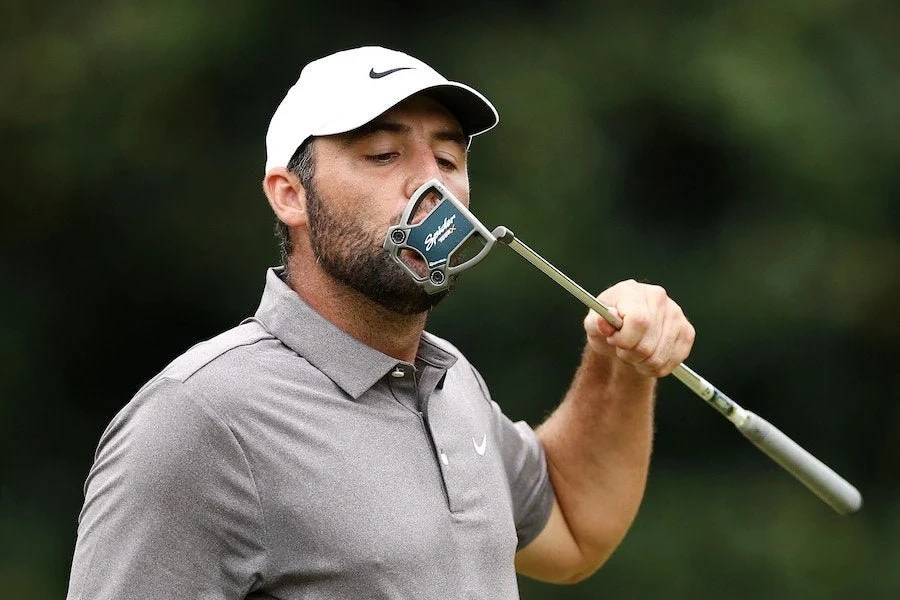
Scottie Scheffler’s TaylorMade Spider Tour X Explained
Scottie Scheffler’s TaylorMade Spider Tour X Analysis | Scottie Scheffler is widely regarded as one of the best golfers in the world, consistently delivering outstanding performances on the PGA Tour and in major championships. While his exceptional ball-striking and course management often receive the spotlight, his equipment choices—particularly the TaylorMade Spider Tour X putter—have also attracted significant attention. The putter has become an essential part of his game, helping him improve stability, consistency, and confidence on the greens.

In this article, we’ll take a closer look at the technology behind the TaylorMade Spider Tour X, explore why Scottie Scheffler chose this putter, and examine how its design contributes to improved putting accuracy.
What Is the TaylorMade Spider Tour X?
The TaylorMade Spider Tour X is a premium mallet putter engineered to deliver exceptional stability, forgiveness, and control. Compared to traditional blade putters, the Spider Tour X features a larger clubhead with strategically distributed weight to maximize performance.
Its design increases the Moment of Inertia (MOI), helping the putter head remain stable even when the ball is struck slightly off-center.
TaylorMade combines lightweight aluminum with stainless steel construction to create an ideal balance between stability and feel, providing golfers with greater confidence on every putt.
Why Does Scottie Scheffler Use the Spider Tour X?
Professional golfers rarely change putters without a compelling reason. For Scottie Scheffler, consistency on the greens is critical, and the Spider Tour X offers several performance advantages.
Some of the key reasons behind his choice include:
- Outstanding stability throughout the putting stroke.
- Easy alignment thanks to the True Path Alignment system.
- High forgiveness on off-center strikes.
- Soft yet responsive feel at impact.
- Increased confidence on pressure putts.
These features help Scheffler maintain consistent putting performance under tournament conditions.
Key Technologies Behind the TaylorMade Spider Tour X
High MOI Design
One of the defining features of the Spider Tour X is its high Moment of Inertia (MOI).
A higher MOI minimizes twisting when contact is made away from the center of the face. As a result, putts stay more accurate even on slight mishits, making the putter more forgiving for golfers of all skill levels.
True Path Alignment
TaylorMade’s True Path Alignment system is designed to simplify aiming.
The visual alignment aid helps golfers square the putter face more easily, making it simpler to start the ball on the intended target line.
This technology has become one of the signature features of the Spider putter family.
White TPU Pure Roll Insert
The Spider Tour X incorporates TaylorMade’s White TPU Pure Roll Insert, engineered to improve roll consistency.
The insert promotes faster forward roll while reducing skidding immediately after impact, resulting in better distance control and a softer feel.
This combination enhances both performance and feedback during putting.
Precision Weighting
The Spider Tour X utilizes carefully positioned perimeter weighting to maximize stability.
By distributing weight toward the outer edges of the putter head, TaylorMade increases forgiveness while maintaining excellent balance for both short and long putts.
How the Spider Tour X Improves Putting Accuracy
Putting accuracy depends on both technique and equipment. The Spider Tour X is designed to support golfers by minimizing common errors during the putting stroke.
Its performance benefits include:
- Reduced face rotation through impact.
- Improved directional consistency.
- Better distance control.
- Easier alignment before each stroke.
- Greater forgiveness on off-center hits.
While technology cannot replace proper technique, it can provide golfers with additional consistency and confidence on the greens.
Is the TaylorMade Spider Tour X Suitable for Amateur Golfers?
Yes. The Spider Tour X is an excellent option for amateur golfers, especially those who struggle with consistency while putting.
Its forgiving mallet design helps reduce the impact of minor mishits, making it easier to produce straighter, more consistent putts.
However, golfers should still choose a putter that matches their stroke style, preferred feel, and personal comfort.
Pros of the TaylorMade Spider Tour X
The Spider Tour X offers several notable advantages:
- High MOI for exceptional stability.
- Easy-to-use alignment system.
- Consistent ball roll.
- Excellent forgiveness.
- Premium construction and materials.
- Trusted by many professional golfers.
Cons of the TaylorMade Spider Tour X
Despite its strengths, the Spider Tour X also has a few drawbacks.
- Premium price compared to many competitors.
- Larger mallet head may require an adjustment period.
- Some golfers prefer the feel of a traditional blade putter.
The TaylorMade Spider Tour X stands out as one of the most advanced putters available today, combining innovative technology with exceptional stability and forgiveness. For Scottie Scheffler, it provides the consistency, alignment, and confidence needed to perform at the highest level.
Although no putter can guarantee better results without practice, the Spider Tour X offers features that can help golfers improve their putting accuracy and overall performance. Whether you’re a competitive player or a weekend golfer, it’s a putter worth considering if you’re looking to become more consistent on the greens.
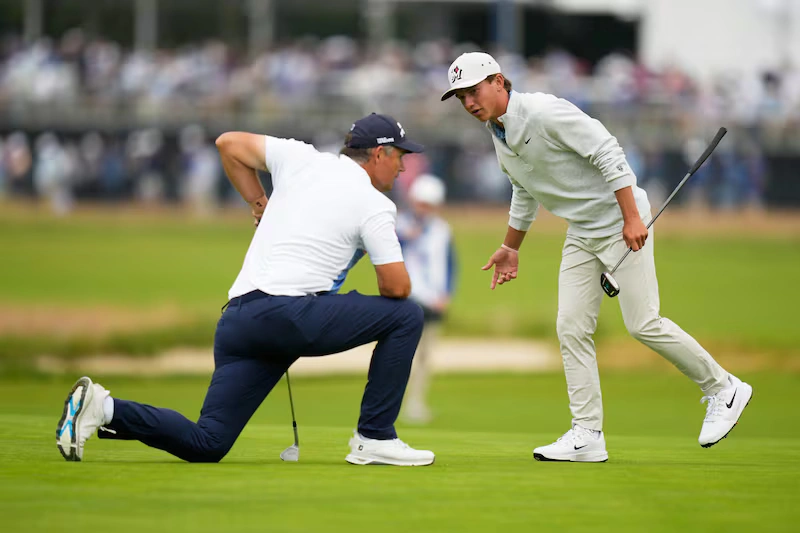
How to Become a Professional Golf Player: Path, Requirements, and Key Standards
How to Become a Professional Golf Player: Path, Requirements, and Key Standards | Becoming a professional golfer is not only about playing the sport well, but also about developing consistency, discipline, and competitive performance at a high level. Professional golf requires years of structured training, mental strength, and participation in official tournaments that measure a player’s ability against international standards.

Unlike casual play, professional golf is governed by performance qualification systems, ranking points, and tour eligibility rules that determine whether a player can compete at the highest level.
1. Mastering Fundamental Golf Skills
Before thinking about turning professional, a player must develop strong technical foundations in all areas of the game, including driving, iron play, short game, and putting, because consistency across all these skills is what separates professionals from amateurs.
A professional-level golfer is expected to control distance, accuracy, and shot selection under different course conditions, while also maintaining a repeatable swing technique that performs reliably under pressure.
Key areas of development include:
- Swing mechanics and ball striking consistency
- Short game control (chipping and pitching)
- Putting accuracy and speed reading
- Course management and decision making
2. Competitive Experience in Amateur Golf
Most professional golfers begin their journey through amateur competitions, where performance in structured tournaments helps build experience and credibility.
Players typically participate in:
- Local and regional tournaments
- National amateur championships
- International amateur events
Success in these competitions is important because it demonstrates the ability to perform under pressure and often serves as a requirement for entry into professional qualifying events.
3. Physical and Mental Conditioning
Modern professional golf demands both physical fitness and strong mental resilience, as players must maintain focus and performance over multiple rounds and varying course conditions.
Physical preparation includes strength training, flexibility, and endurance, while mental preparation focuses on concentration, emotional control, and the ability to recover quickly from mistakes during a round.
Professional golfers often work with coaches, sports psychologists, and fitness trainers to maintain peak performance levels throughout the season.
4. Turning Professional and Eligibility Requirements
To become a professional golfer, a player must officially declare professional status and meet the requirements of golf organizations or tours, depending on the region and level of competition.
One of the most common pathways is through qualifying schools (often called “Q-School”), where players compete for membership on professional tours such as developmental circuits or major tours.
General requirements may include:
- Strong performance in recognized amateur or qualifying events
- Passing tour qualification stages (Q-School or equivalent)
- Meeting handicap or scoring benchmarks depending on the tour
- Official registration as a professional athlete
Once accepted, players gain eligibility to compete in professional tournaments and begin earning prize money.
5. Competing in Professional Tours
After gaining professional status, golfers must continuously perform well to maintain their tour card or ranking position, as most professional circuits operate on a performance-based system.
Players compete in tournaments to earn ranking points, prize money, and exemptions for future events, while those who fail to meet minimum performance standards may lose their tour eligibility and need to re-qualify.
Consistency is crucial, as even highly skilled players must maintain results to stay active in professional competition.
6. Long-Term Development and Career Growth
A professional golf career is built over time through continuous improvement, adaptation to different courses, and experience in high-pressure situations, as well as maintaining physical and mental stability throughout long competitive seasons.
Successful professionals often refine their technique, upgrade their equipment strategy, and analyze performance data to stay competitive at national and international levels.
Becoming a professional golfer requires more than talent; it demands structured skill development, competitive experience, and successful completion of qualification systems established by golf authorities. With dedication, discipline, and consistent performance, a player can progress from amateur levels to competing on professional tours.