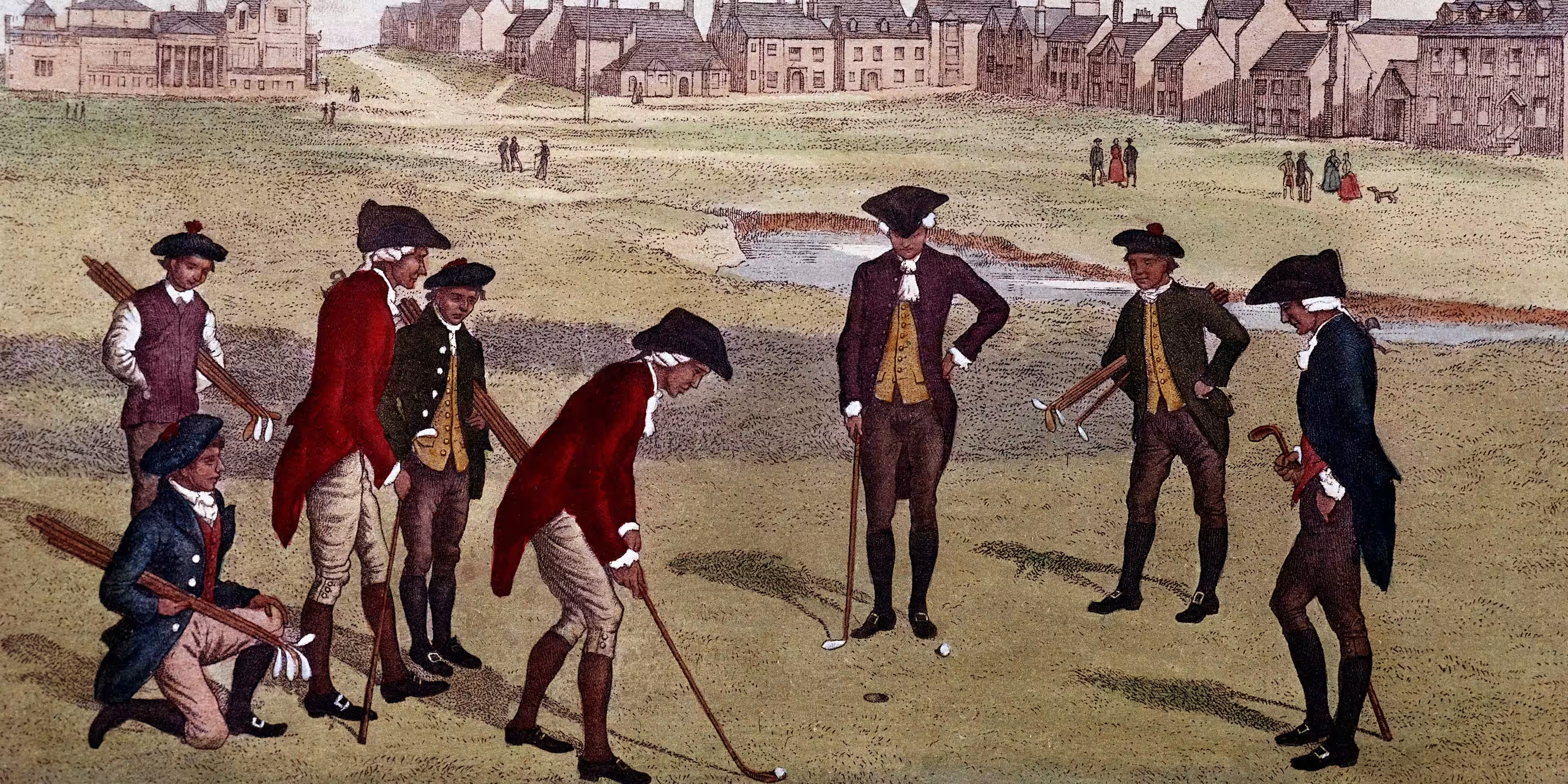
Royal Games: The Origins of Golf in Kingdoms – The story of golf is more than a tale of clubs and courses. It is a journey through royal courts, medieval kingdoms, and windswept landscapes where nobles once gathered to test their skill and status. When we talk about the origins of golf, we are stepping into a world where sport was not only entertainment but also a symbol of prestige and power.
Long before modern tournaments and championship greens, golf was deeply connected to royalty. Kings and queens embraced the game, turning it into one of the most recognized royal games in European history. Understanding the history of golf means exploring the kingdoms that shaped it and the rulers who helped it survive and flourish.
The Medieval Roots of Golf
The early origins of golf can be traced back to medieval Europe. While historians often debate the exact birthplace of the game, Scotland is widely regarded as the true home of modern golf. In the 15th century, records show that a stick-and-ball game similar to golf was already popular among the Scottish people.
Interestingly, golf was not always welcomed with open arms. In 1457, King James II of Scotland famously banned golf because it distracted soldiers from practicing archery, which was considered essential for national defense. This royal ban is one of the earliest documented references in the history of golf. Rather than disappearing, however, the game grew in popularity.
By the time King James IV came to the throne, the royal attitude toward golf had changed dramatically. James IV became an enthusiastic player himself. His passion elevated golf from a casual pastime to a respected royal sport. This shift marked a turning point in the origins of golf within European kingdoms.
Scotland: The Cradle of Royal Golf
Scotland’s coastal landscapes played a crucial role in shaping early golf. The natural dunes and grassy plains, known as “links,” created perfect conditions for the game. These links courses became gathering places for both commoners and nobles.
St Andrews, now known as the “Home of Golf,” began to rise in prominence during this era. As more members of the royal court embraced the game, St Andrews became associated with prestige and tradition. The connection between Scottish royalty and golf cemented the sport’s noble image for centuries to come.
The influence of the Scottish monarchy cannot be overstated. Their support transformed golf into a respected activity across social classes. From village greens to royal estates, golf slowly evolved into one of the most celebrated royal games in Europe.
Golf and the Power of Royal Patronage
Royal patronage played a decisive role in the survival and expansion of golf. When monarchs supported a sport, it gained legitimacy, funding, and visibility. In the case of golf, royal endorsement gave the game a powerful boost.
Mary, Queen of Scots, is another key figure in the history of golf. She was known to play the game during the 16th century, and her involvement helped popularize golf beyond Scotland. When she later lived in France, she introduced elements of the game to the French court. Some historians believe that this cultural exchange influenced similar stick-and-ball games across Europe.
Royal involvement also helped formalize the rules of golf. As the sport became more structured, clubs and societies began to form. The establishment of the Honourable Company of Edinburgh Golfers in 1744 marked a significant milestone. This organization created one of the earliest written sets of golf rules, helping standardize the game.
The development of official rules was a major step in transforming golf from a simple pastime into an organized sport. Without the influence of kingdoms and royal courts, this evolution might have taken much longer.
From Courtly Pastime to Organized Sport
As golf gained popularity among nobles, it gradually spread beyond the royal courts. Merchants, landowners, and military officers began adopting the game. Courses were developed near towns, and local competitions became common.
The role of kingdoms in this transition was subtle but important. When a king or queen embraced golf, it sent a message that the sport was worthy of attention. This cultural approval allowed golf to expand socially and geographically.
By the 18th century, golf had firmly established itself in Scotland and was beginning to reach England and beyond. Royal influence helped shape the sport’s image as refined, disciplined, and honorable. These qualities remain part of golf’s identity today.
The Spread of Golf Across Kingdoms
The origins of golf may be Scottish, but its growth was international. As trade and travel increased, the game crossed borders. British influence, supported by royal prestige, carried golf to colonies and neighboring kingdoms.
In England, the sport gained traction among aristocrats. Exclusive golf clubs began to appear, reflecting the same sense of tradition and hierarchy found in Scottish courses. The royal connection gave the sport an aura of sophistication that appealed to the upper classes.
During the 19th century, the expansion of the British Empire further accelerated the global spread of golf. Courses were established in India, Australia, and North America. In many cases, these early courses were linked to British officials who brought their love of the game overseas.
While the sport gradually became more accessible to the public, its royal roots remained part of its story. Tournaments, club names, and traditions often referenced kings, queens, and historic kingdoms. This heritage helped preserve the narrative of golf as one of the great royal games of history.
The Enduring Legacy of Royal Influence
Even in the modern era, traces of golf’s royal origins are everywhere. The term “Royal” in club names, such as Royal Troon or Royal St George’s, reflects official recognition granted by the British monarchy. This designation continues to symbolize prestige and historical significance.
Major tournaments often take place on courses with deep royal connections. The Open Championship, one of the oldest golf tournaments in the world, is frequently hosted at historic links courses that date back centuries. These events celebrate not only athletic excellence but also the enduring history of golf.
The traditions of etiquette, dress codes, and respect for the game’s heritage can all be linked to its early association with nobility. Golf developed within a culture that valued discipline and honor, qualities reinforced by royal participation.
Why the Origins of Golf Still Matter Today
Understanding the origins of golf in kingdoms gives modern players a deeper appreciation for the sport. Golf is not just about technique or competition; it carries centuries of cultural history.
The story of kings banning and later embracing the game highlights how sports can evolve within society. Royal endorsement transformed golf from a distraction into a national treasure. That transformation shaped the global sport we recognize today.
For enthusiasts and historians alike, the history of golf offers a fascinating glimpse into medieval life, political power, and cultural exchange. From Scottish links to royal courts across Europe, golf’s journey reflects the shifting dynamics of kingdoms and society.
Today, when players step onto a course, they are participating in a tradition that began in the shadow of castles and along rugged coastlines. The fairways may be more polished, and the equipment more advanced, but the spirit of those early royal games remains.
The legacy of golf’s royal beginnings continues to influence its identity. From prestigious tournaments to historic clubs, the connection between golf and kingdoms is still visible. It is this blend of sport, tradition, and noble heritage that makes golf unique among the world’s games.
In the end, the origins of golf are not just about where the game started. They are about how it survived bans, gained royal favor, and spread across continents. The kingdoms that once shaped the sport may have changed, but their impact on golf endures, echoing through every swing and every historic course around the world.